
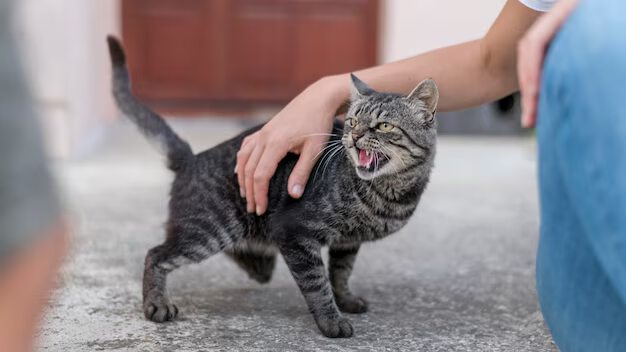
My cat meows at night: why it happens and how to stop it without stress
You’re finally in bed. Lights off. The house is quiet. And then… meow. Loud. Insistent. Again. If you’re here, chances are your cat has turned into a nocturnal opera singer, and honestly, you’re tired. Like, really tired. The good news ? Night-time meowing is common, and most of the time, it’s explainable. Even better : you can act on it without freaking your cat out or turning your evenings into a battle.
Second thing, and I know it sounds random, but a lot of people stumble on this topic while browsing all sorts of animal or lifestyle content late at night (ironic, right ?). I ended up reading about it after bouncing around sites like https://destination-ailleurs.net, one thing leading to another. Anyway. Back to your cat and those 3 a.m. concerts.
First question : what kind of meowing are we talking about ?
Not all meows are equal. And this matters, a lot.
Is it a short “hey ?” kind of sound ? Or a long, drawn-out yowl that sounds like something is seriously wrong ? Does it happen every night, around the same hour ? Or only once in a while ?
Cats don’t meow randomly. They communicate. Sometimes poorly timed, sure, but there’s always a reason. Hunger, boredom, stress, confusion, habit… or just because they know it works.
And yes, they absolutely learn fast.
The most common reasons cats meow at night
1. Your cat is bored (and slept all day)
This one is incredibly common. Indoor cats especially. If your cat naps from 10 a.m. to 6 p.m., guess what ? At midnight, they’re fresh, alert, and ready to hunt imaginary prey in the hallway.
I’ve seen cats zoom across apartments at 2 a.m., pupils huge, tail puffed, clearly living their best life. Meanwhile, the humans are dead inside.
Cats are crepuscular. Dawn and dusk are their thing. Night activity is… kind of normal.
2. Hunger or food-related habits
If you ever fed your cat during the night, even once, congratulations : you may have created a routine. Cats have an internal clock that’s scary accurate. Some will start meowing 30 minutes before their “usual” feeding time.
And no, they’re not starving. They just remember.
3. Stress or changes in the environment
Moved furniture ? New pet ? New baby ? Even something small, like a closed door that used to be open, can throw some cats off.
Night-time is quiet. That’s when anxiety creeps in. Meowing can be a way to self-soothe or to check “are you still there ?”
4. Age-related issues
Older cats sometimes meow at night because they’re disoriented. Cognitive dysfunction (basically feline aging of the brain) can cause confusion, especially in the dark. It’s sad, and yeah, it surprised me the first time I learned about it.
5. Medical reasons
Pain, hyperthyroidism, high blood pressure… Some health issues make cats more vocal, especially at night when distractions are gone. If the meowing is sudden, intense, or new, a vet visit is not optional. Seriously.
What NOT to do (even if you’re exhausted)
Let’s be clear. Yelling won’t help. Spraying water ? Bad idea. Locking your cat in a room without preparation ? Usually backfires.
And getting up to pet or feed them “just this once”? That’s how habits are born. Cats don’t forget. Ever.
I get it though. At 4 a.m., logic is weak.
How to reduce night-time meowing, gently
Increase evening activity
Play with your cat before bed. Not a quick two-minute thing. A real session. Wand toys, chasing, jumping. You want them slightly tired. Not exhausted, just… satisfied.
Then feed them after play. Hunt → eat → sleep. That’s the natural sequence. It works more often than people think.
Adjust feeding schedules
If your cat wakes you for food, consider smaller meals spread out, or an automatic feeder set for early morning. That way, you’re not the food source at night.
Yes, cats can be manipulative. Smart ones.
Make the night environment reassuring
Some cats hate closed doors. Others hate total darkness. A small night light, access to favorite spots, or even soft background noise can help. I’ve seen cats calm down just because the hallway light stayed on.
Ignore the meowing (when appropriate)
This is hard. But if the meowing is attention-seeking and you’re sure your cat is healthy and safe, consistency matters. If you respond sometimes and not others, the behavior sticks longer. It’s like slot machines. Unpredictable rewards are powerful.
When you really should see a vet
If your cat :
- Suddenly starts meowing at night with no obvious reason
- Seems restless, confused, or distressed
- Is older and the behavior is new
- Shows other signs (weight loss, increased thirst, aggression)
Then yeah, book that appointment. Night meowing is sometimes the first visible sign of something deeper.
So… will it ever stop ?
Honestly ? In many cases, yes. With routine, stimulation, and a bit of patience, night-time meowing often decreases. Not always overnight (no pun intended), but it does improve.
And sometimes, you’ll still get the occasional meow at 5 a.m. Cats are cats. They have opinions. Strong ones.
But understanding why your cat meows changes everything. You stop taking it personally. You stop guessing. And you can finally sleep without feeling like you’re failing as a cat human.
If your cat could explain it themselves, they probably would. Until then, we translate. And adjust.