
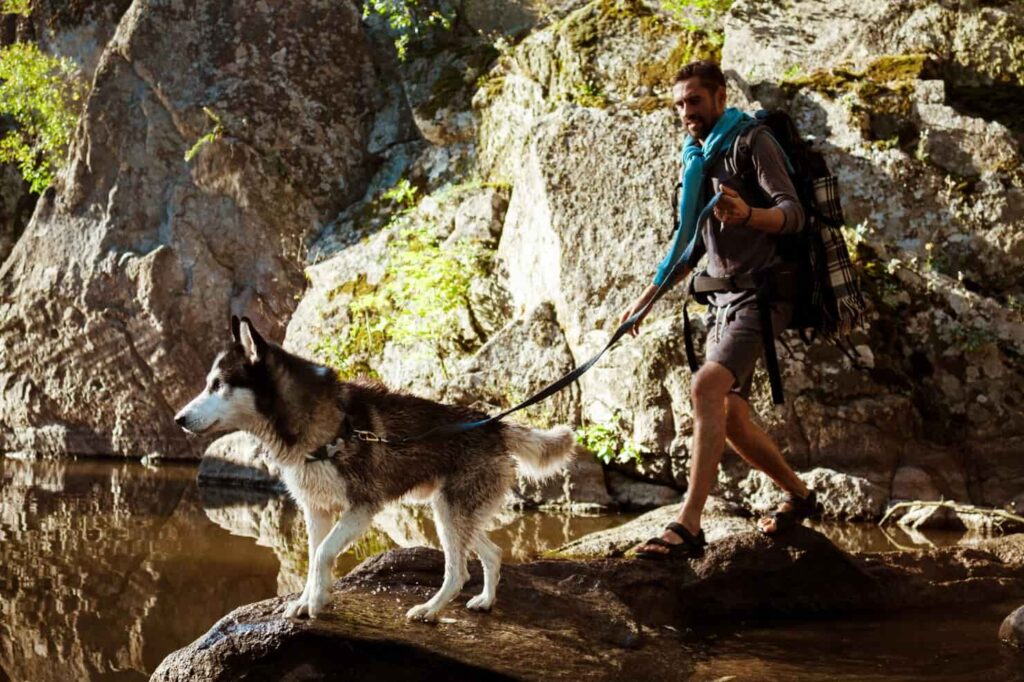
Long-Distance Hiking with Dogs: Preparation, Gear and Essential Rules
Let’s be honest right away. Long-distance hiking with a dog can be incredible… or a total mess if it’s badly prepared. I’ve seen both. Happy dogs trotting for hours, tongue out, eyes shining. And others, limping after 10 km, clearly wondering why they even left the car. So yes, dogs and long hikes can absolutely work, but not just any dog, not any trail, and definitely not without prep. If you’re wondering “can my dog handle a full-day hike, or even several days ?”, you’re asking the right question.
Second thing to say, and people don’t always like hearing it : hiking with a dog isn’t just about the dog. It’s also about the environment, the rules, the people you meet on the trail. If you’re into nature-friendly travel, slow hiking, and respecting wildlife, you’ll probably already be familiar with this mindset from places like https://www.eco-tourisme.net. Same logic applies when your dog is part of the adventure.
Is your dog physically ready for long-distance hiking ?
Not all dogs are built for long hikes. That’s just reality. A young, healthy Border Collie or Norwegian Elkhound won’t have the same limits as a brachycephalic breed or an older dog with stiff joints. And age matters a lot. Puppies ? Big no. Their bones aren’t finished growing, and pushing them too early can cause long-term damage. Perso, I don’t take a dog on real distance hikes before 12–18 months, depending on the breed.
Conditioning is key. You don’t wake up one morning and decide to walk 25 km with your dog because the weather looks nice. Start small. 5 km. Then 8. Then 12. Watch how your dog recovers the next day. Is he stiff ? Slower ? Less enthusiastic ? Those are signals. And yeah, dogs don’t complain like humans, which makes it trickier. You have to observe, really observe.
Training before the hike : don’t skip this part
Physical condition is one thing. Behavior is another. A dog who pulls like a tractor, chases every bird, or panics when meeting other hikers will turn a beautiful hike into stress. For everyone. Before thinking “long distance”, your dog should be comfortable walking calmly for hours, responding to recall even when tired, and staying focused despite distractions.
I’ve noticed something funny over the years : dogs often behave worse when they’re exhausted. Less patience, less listening. So training endurance walks beforehand isn’t just about muscles, it’s also about mental stamina. Can your dog stay polite after 4 hours on the trail ? That’s the real test.
Essential equipment for long hikes with a dog
Let’s talk gear. And no, this isn’t about buying fancy stuff for Instagram.
Harness over collar, always. A well-fitted Y-shaped harness distributes pressure and lets the dog breathe properly. Collars on long hikes ? I really don’t like them. One sudden pull, one slip on a rocky section, and you regret it.
Leash length matters. A 2–3 meter leash is a good compromise. Long enough for freedom, short enough for control. Retractable leashes on mountain trails ? Honestly, I hate them. Too unpredictable.
Water, water, water. Dogs overheat fast. Much faster than we do. Even in cool weather. I usually plan around 50–100 ml of water per kg of dog, depending on temperature and effort. And don’t assume streams are safe. Sometimes they are, sometimes… not really.
Paw protection. This one divides people. Booties aren’t mandatory for every dog, but sharp rocks, hot gravel, or multi-day hikes can destroy pads. I’ve seen pads crack open on day two. Not fun. At least carry booties in your pack, just in case.
Feeding and energy management on the trail
Here’s something that surprised me at first : many dogs don’t want to eat much during intense hikes. Stress, excitement, fatigue… it happens. That’s why I prefer energy-dense food, given in small portions during breaks. Not a huge meal at midday. That can lead to digestive issues, or worse.
After the hike, though ? That’s when nutrition really matters. Good proteins, enough calories, and rest. Lots of rest. The day after a long hike should be calm. No agility training, no crazy fetch sessions. Recovery is part of training, for dogs too.
Rules, wildlife, and respect on the trail
This is important, and sometimes ignored. Many hiking areas have leash laws, seasonal restrictions, or wildlife protection rules. Especially during breeding seasons. A dog chasing deer “just for fun” can cause real damage. And yes, even if your dog comes back.
Always check local regulations before hiking. And even when off-leash is allowed, ask yourself : is it appropriate here ? Narrow trails, lots of people, livestock nearby… sometimes keeping the leash on is simply the respectful choice.
Knowing when to stop : the hardest decision
The toughest part of hiking with a dog ? Knowing when to turn back. Your dog might still walk, but slower. Less bounce. Tail lower. Maybe slight limping that comes and goes. This is where experience counts. And humility. I’ve turned back 5 km from a summit because my dog wasn’t right. Was I frustrated ? Yeah. Was it the right call ? Absolutely.
Remember this : the mountain will still be there next time. Your dog’s health is not replaceable.
Final thoughts
Long-distance hiking with a dog can be one of the best shared experiences you’ll ever have. The rhythm, the silence, the feeling of moving together. But it only works if you prepare properly, choose the right conditions, and listen to your dog more than your ego. If you do that, that wagging tail at the end of the day ? Totally worth it.